


The digital marketing world has split into two paths, and choosing the right one could make or break your online success. Traditional SEO still helps people find your website through search engines, but now there’s something new called GEO that focuses on getting AI systems to share your content as direct answers. Smart businesses are learning when to use each approach to reach their customers most effectively.
Michael Gleed, founder of Wailea Direct Marketing with over 25 years of marketing experience, has guided businesses through every major shift in digital marketing. His expertise in AI-driven SEO and answer engine optimization gives him a unique perspective on how to balance these two powerful strategies for maximum impact.
Why This Choice Matters More Than Ever
Understanding the difference between SEO and GEO isn’t just marketing jargon anymore. It’s about meeting people where they actually look for information. When someone types a question into Google, they might see your website listed in the results. But when they ask Siri or Alexa the same question, they want an immediate answer, not a list of websites to visit.
SEO helps your business show up when people are ready to explore and learn more. Think of it like having a really good storefront that attracts people who are already walking down the street looking at different options. These visitors are willing to spend time browsing and comparing what you offer.
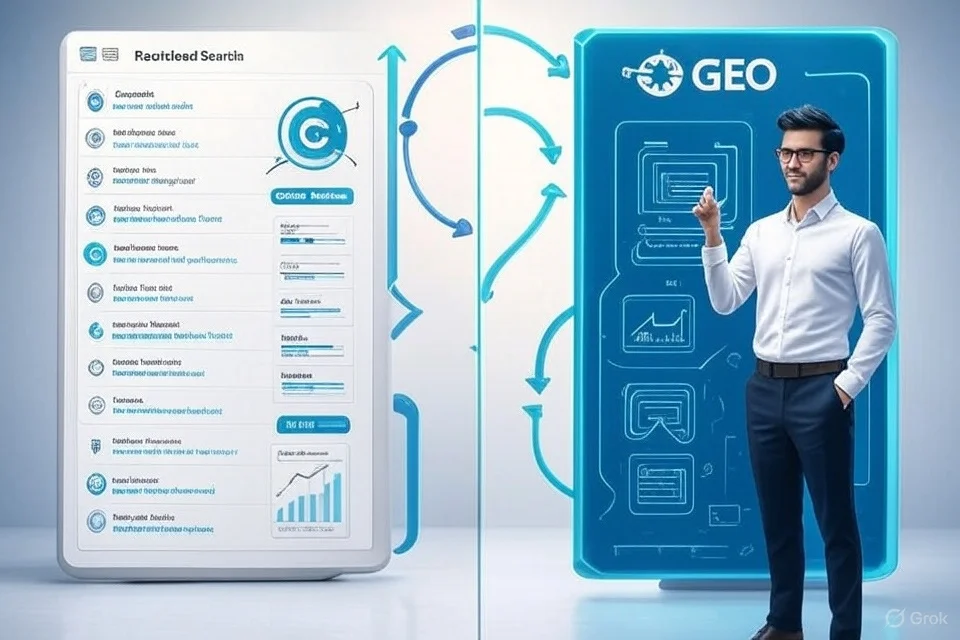
GEO works completely differently. It’s like being the expert that everyone’s smart assistant recommends when they need a quick answer. Instead of getting people to visit your website, GEO gets AI systems to share your knowledge directly with users who ask relevant questions.
The businesses that understand this difference are the ones thriving right now. They know when to create content that brings people to their websites and when to create content that establishes them as the go-to expert that AI systems trust and quote.
How Traditional SEO Has Grown Up
SEO used to be about stuffing keywords into your content and hoping search engines would notice. Those days are long gone. Modern SEO focuses on creating genuinely helpful experiences that make people want to stay on your website and come back for more.
Search engines now care more about user experience than keyword density. This means your website needs to load quickly, work well on phones, and provide clear, valuable information. Businesses in tech-heavy markets like Seattle and San Francisco have learned this lesson well, investing in website performance and user-friendly design.
Core Web Vitals have become the new report card for websites. These metrics measure how fast your pages load, how quickly they respond to user interactions, and how stable the visual elements are. If your website fails these tests, even great content won’t save your search rankings.
| Old SEO Focus | Modern SEO Focus | Why It Matters |
| Keyword stuffing | User experience quality | Search engines prioritize helpful content |
| Link quantity | Content authority | Trust and expertise drive rankings |
| Technical tricks | Genuine value | Sustainable long-term results |
Structured data has become incredibly important for modern SEO. This is special code that helps search engines understand exactly what your content is about. When you mark up your content properly, you might see it featured in rich snippets, knowledge panels, and other special search result features.
The most successful SEO strategies now focus on becoming the most helpful resource in your field. Instead of trying to game the system, smart businesses create comprehensive, well-organized content that genuinely serves their audience’s needs.
Understanding the New World of GEO
Generative Engine Optimization represents a fundamental shift in how content gets discovered and shared. Instead of trying to get people to click through to your website, GEO focuses on becoming the source that AI systems reference when answering questions.
Think about how you use voice assistants or chatbots. You ask a question and expect a direct answer, not a list of websites to visit. GEO optimizes your content to be that direct answer. When someone asks their smart speaker about your area of expertise, you want your business to be the source of the response they hear.
This requires a completely different approach to content creation. GEO content must be self-contained, accurate, and easily extractable. A good GEO-optimized answer can stand alone and make complete sense even when taken out of the context of your full article or webpage.
| Content Type | SEO Approach | GEO Approach |
| Blog articles | Comprehensive, narrative-driven | Concise, fact-focused sections |
| Product descriptions | Keyword-optimized storytelling | Clear, specific feature summaries |
| FAQ sections | Detailed explanations | Direct, quotable answers |
The structure and format become crucial for GEO success. AI systems need to quickly identify and extract the most relevant information from your content. This means using clear headings, bullet points, and organizing information in logical, scannable formats.
Successful GEO content establishes authority through precision rather than length. A concise, well-researched answer to a common question can become the standard response that AI systems share, building your reputation as a trusted expert in your field.
Finding the Perfect Balance Between Both Strategies
The most successful businesses don’t choose between SEO and GEO. They use both strategies strategically, understanding when each approach serves their goals best. This requires creating different types of content that work together to build comprehensive online authority.
SEO content focuses on engagement and exploration. These are the detailed guides, comprehensive articles, and in-depth resources that bring people to your website and keep them there. This content tells stories, provides context, and builds relationships with your audience over time.
GEO content prioritizes clarity and extraction. These are the quick answers, clear definitions, and specific facts that AI systems can easily find and share. This content establishes expertise and gets your business mentioned in AI-powered responses across various platforms.
The key is understanding your audience’s different needs throughout their journey. Someone researching a complex business decision might need your comprehensive SEO content. The same person asking a quick question while driving might benefit from your GEO-optimized answer through their car’s voice assistant.
| User Intent | Best Strategy | Content Example |
| Research and comparison | SEO-focused | Detailed buying guides |
| Quick factual answers | GEO-focused | FAQ responses |
| Problem-solving | Both combined | Step-by-step tutorials with clear summaries |
Creating content that serves both purposes requires careful planning. You might write a comprehensive article for SEO that includes clearly marked sections optimized for GEO extraction. This dual approach maximizes your content’s value across different discovery methods.
Success comes from viewing SEO and GEO as complementary rather than competing strategies. Each approach strengthens the other by building different aspects of your online authority and reaching people through different channels.
When to Prioritize GEO Over Traditional SEO
Certain situations call for putting extra focus on GEO strategies. Understanding these scenarios helps you allocate your content creation resources most effectively and respond to your audience’s specific needs.
Local and high-intent searches are perfect for GEO optimization. When someone searches for “best Thai restaurant near downtown Phoenix” or “emergency locksmith in Austin,” they want an immediate, specific answer. GEO helps position your business as that direct response.
Highly competitive industries often benefit from GEO strategies because traditional SEO becomes increasingly difficult and expensive. When everyone in your field is fighting for the same keywords, GEO offers an alternative path to visibility through AI-powered answers and voice search results.
Time-sensitive queries represent another strong GEO opportunity. People asking about current events, weather conditions, business hours, or immediate needs expect quick, accurate responses. GEO optimization helps ensure your business provides those instant answers.
The nature of your expertise also influences when to emphasize GEO. If your business solves specific problems or answers particular questions regularly, creating GEO-optimized content around those topics can establish you as the definitive source that AI systems reference.
Getting the Right Support and Tools
Successfully implementing both SEO and GEO strategies requires access to specialized tools and expert guidance. The digital marketing landscape changes quickly, and staying current with best practices across both approaches demands ongoing learning and adaptation.
Analytics tools now need to track both traditional SEO metrics and GEO performance indicators. You want to monitor not just how many people visit your website, but also how often AI systems cite your content as authoritative sources. This dual tracking gives you a complete picture of your online influence.
AI citation tracking platforms help you understand when and where your content gets referenced by AI systems. This information is valuable for identifying which topics establish your authority and which areas might need more focused content development.
Professional guidance becomes especially valuable when balancing SEO and GEO strategies. Experts who understand both approaches can help you create integrated content strategies that maximize your visibility across traditional search engines and AI-powered platforms.
The goal is building internal capability while leveraging external expertise strategically. You want your team to understand the basics of both SEO and GEO so they can make informed daily decisions about content creation and optimization.
Building Content That Works for Both Humans and AI
The most effective content strategy creates materials that satisfy both human readers and AI systems without compromising either experience. This requires understanding what each audience values and finding ways to deliver both effectively.
Human-focused content emphasizes narrative, emotion, and engagement. People want to feel connected to your brand and understand how your expertise applies to their specific situations. This content builds trust through storytelling and demonstrates your understanding of real-world challenges.
AI-focused content prioritizes accuracy, structure, and extractability. AI systems need clear, factual information that can be easily identified, extracted, and shared. This content establishes authority through precision and comprehensive coverage of specific topics.
| Content Element | Human Optimization | AI Optimization |
| Headlines | Engaging and curiosity-driven | Clear and descriptive |
| Structure | Narrative flow | Logical information hierarchy |
| Details | Context and storytelling | Facts and specifications |
The most successful approach involves creating layered content that serves both needs simultaneously. You might start with a clear, GEO-optimized summary that AI can easily extract, then expand into detailed, SEO-focused explanations that engage human readers.
Structured data markup becomes crucial for helping AI systems understand your content while maintaining the human readability that drives engagement. This technical foundation supports both your SEO and GEO objectives without requiring separate content creation efforts.
Following Best Practices for Long-term Success
Sustainable success with both SEO and GEO requires following established best practices that build authority over time. The foundation of any effective strategy rests on the principles of Experience, Expertise, Authoritativeness, and Trustworthiness.
Experience means creating content that reflects genuine, hands-on knowledge of your field. Whether you’re writing about local business challenges in markets like Denver or explaining technical processes, your content should demonstrate real-world understanding that comes from actual practice.
Expertise goes beyond experience to show deep, specialized knowledge. This means not just knowing how to do something, but understanding why it works, when it doesn’t, and how it connects to broader industry trends and best practices.
Authoritativeness develops when other credible sources consistently reference your content and expertise. This happens naturally when you provide reliable, well-researched information that other professionals in your field find valuable enough to cite and share.
Trustworthiness builds over time through consistent delivery of accurate, helpful information. This means being honest about limitations, citing sources when appropriate, and always prioritizing your audience’s needs over your promotional goals.
The Future Belongs to Integrated Strategies
The businesses that will succeed in the coming years are those that master both SEO and GEO rather than choosing one over the other. This integrated approach creates multiple pathways for customers to discover and engage with your expertise.
SEO continues to provide the foundation for long-term online visibility. Well-optimized websites that offer genuine value to visitors remain essential for building sustainable business growth and establishing comprehensive market presence.
GEO adds a new dimension by making your expertise available through AI-powered channels that increasingly influence how people find information. As voice search and AI assistants become more prevalent, having your content optimized for these platforms becomes increasingly valuable.
Michael Gleed’s work with Wailea Direct Marketing demonstrates how this integrated approach pays off in practice. By helping businesses optimize for both traditional search engines and AI-powered discovery, his clients build more resilient online presences that adapt to changing user behaviors and technology trends.
The future belongs to businesses that view SEO and GEO as complementary tools in a comprehensive digital strategy. Rather than replacing traditional optimization, GEO enhances it by reaching audiences through new channels while maintaining the foundation that SEO provides for sustainable growth.
Frequently Asked Questions
What is the main difference between GEO and SEO?
GEO focuses on creating content that AI systems can easily extract and share as direct answers to user questions, while SEO aims to attract human visitors to your website through engaging, comprehensive content. GEO prioritizes being quoted by AI, while SEO focuses on driving website traffic and engagement.
When should I focus more on GEO strategies for my brand?
Consider emphasizing GEO when you’re targeting local searches, high-intent queries, or operating in highly competitive industries where traditional SEO is expensive and difficult. GEO works especially well for businesses that regularly answer specific questions or solve immediate problems for their customers.
Can SEO and GEO work together in my marketing strategy?
SEO and GEO complement each other perfectly when implemented strategically. SEO builds comprehensive online authority and drives sustained website engagement, while GEO ensures your expertise gets shared through AI-powered platforms and voice search. Using both approaches creates multiple pathways for customers to discover your business and establishes authority across different discovery channels.
